Apple Peeler Review

Apple peeler review - Very fast and easy!! Peels apples skin without making a mess in 10-15 millisecond!

Apple's skins from Apple peeler machine.
After peel skin with Apple peeler.

What's the best hot tub?

If you are looking for hot tub for your home. You may need to do research a lot about hot tubs. And I done that before. Hundred of stores, thousand of reviews. The one that you like and the price that you acceptable.

How much budget do you have? You can get a hot tub for low price or you want the one that will last for long. Would you like to pay a bit more expensive and get the better one?

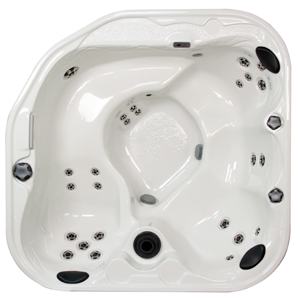
Aura 29 Jet 120 Volt Interior Plug and Play Operation Hot Tub is 5 stars rating from customers in Amazon.com.

Why you need to consider about Aura 29 Jet 120 Volt Interior Plug and Play Operation Hot Tub?

  • Relaxing hot tub for your home with 29 jets; one lounge and four seats.
  • Easy to set up and operate with no special wiring or plumbing necessary. 
  • 29 therapy jets including two neck jets.
  • Includes cover; ozone compatible.
  • Holds 265 gallons; measures 77 x 77 x 34 inches (WxDxH).
Aura 29 Jet 120 Volt Interior Plug and Play Operation Hot Tub with Hard Cover
Aura 29 Jet 120 Volt Interior Plug and Play Operation Hot Tub

The Aura 29-jet hot tub in white


HOW TO MAKE HALL CHAIR


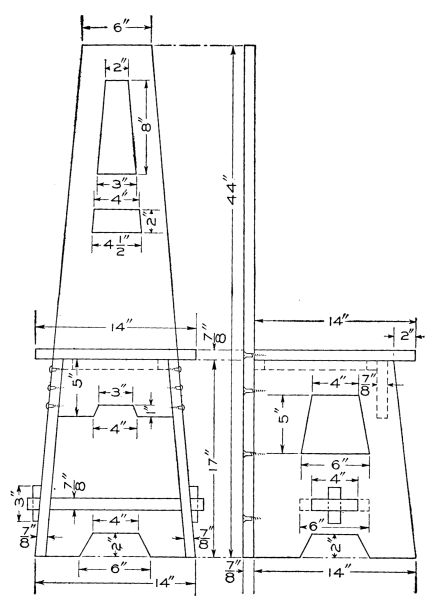
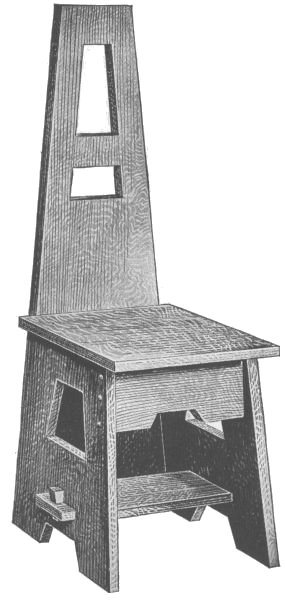
  • This hall chair is designed to take up as little room as possible. For its construction the following stock will be needed:
    • 1 back, 7/8 by 14 by 44 in., S-2-S.
    • 2 sides, 7/8 by 14 by 17 in., S-2-S.
    • 1 seat, 7/8 by 14 by 14 in., S-2-S.
    • 1 stretcher, 7/8 by 6 by 16 in., S-2-S.
    • 1 brace, 7/8 by 5 by 11 in., S-2-S.
    • 1 piece, 7/8 by 7/8 by 44 in., for cleats.
    These dimensions are for finished pieces, therefore 1/4 in. should be allowed for planing if the stock cannot be secured finished.
    Lay out and cut the design on the back, sides, and brace. To cut the openings, first bore a hole near one corner to get the blade of a coping saw through and proceed to saw to the lines. Smooth the edges after sawing by taking a thin shaving with a sharp chisel. A file will not leave a good surface.
    Mark the tenons on the ends of the stretcher and cut them with a backsaw and make smooth with a chisel. From the tenons mark the mortises in the sides through which they are to pass.
    Detail of the Hall Chair
    Complete Hall Chair in Plain Oak
    To cut these mortises, first bore a row of holes with a 5/8 in. bit, boring halfway from each side so as not to split off any pieces. Now make of scrap material the two keys and from them mark the small mortises in the tenons.
    Before putting the chair together, the cleats for holding the seat should be fastened to the sides, back and brace. Use flat-head screws for this purpose. Then put the sides and stretcher together, and fasten the back to the sides with flat-head screws.
    The brace should be put in next, using three round-head screws in each end. There only remains the top, which is held by screws through the cleats from the under side.
    Stain with two coats of weathered or mission-oak stain, and then apply a thin coat of "under-lac" or shellac and two coats of wax.
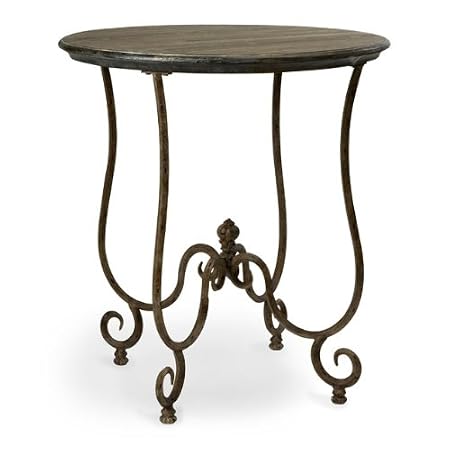
    Nantucket Weathered Wood Table

    Nantucket Weathered Wood Table


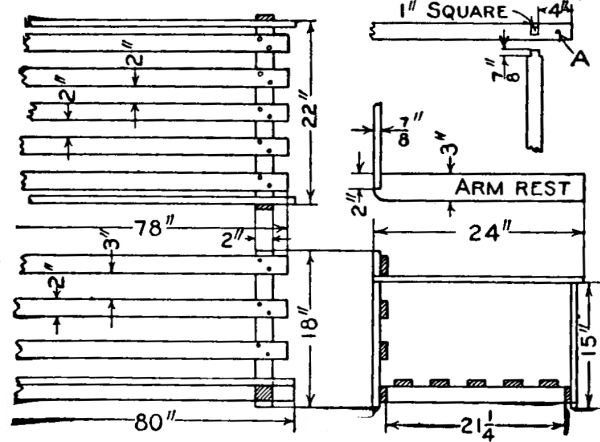
HOW TO MAKE LAWN SWING

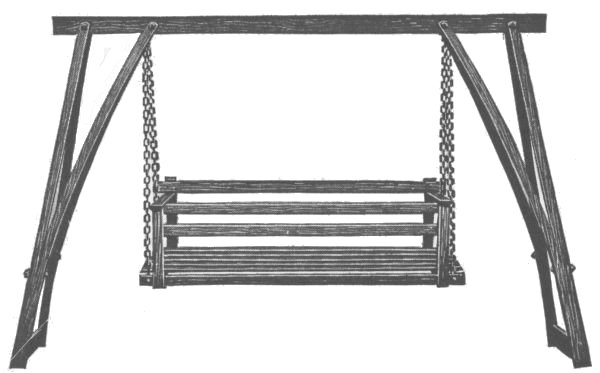
The coming of spring and summer calls forth various kinds of porch and lawn furniture. A porch or lawn swing to accommodate two or more persons is a thing desired by most people. The lawn swing as shown in the picture is portable and does not need stakes to hold it to the ground. While this swing is substantial and rigid it can be moved from place to place on the lawn, or the chains can be fastened with heavy hooks to the ceiling of a porch instead of using the stand. Either ropes or chains may be used to hang the swing and should be of such length that the seat will be about 20 in. from the ground or floor.

The drawing giving the dimensions for constructing the seat shows how the parts are put together. The front and back apron pieces are mortised to receive a 1-in. square tenon cut on the crosspieces that support the slats. Each end of the apron pieces extends 4 in., and a hole is bored at A into which the hanging ropes or chains are fastened. If ropes are used, bore the holes to fit the rope and when the end of each rope is put through a hole it is tied in a knot to keep from slipping out. Chains can be fastened with eye bolts. Small carriage or stove bolts are used to hold the slats on the framework and cross pieces. The arm rests are fastened with wood screws.
HOW TO MAKE LAWN SWING
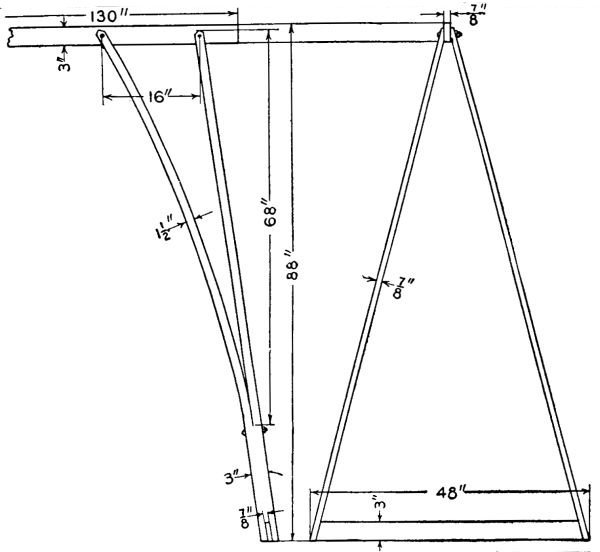
The drawing for the stand gives all the dimensions for its construction. Split the upright pieces or legs with a saw cut to the length as shown. A bolt should be put through each piece edgewise at the end of the saw cut, to keep the wood from splitting any farther when the ends are spread to receive the bolts through the cross pieces at the top. The upper ends of the ropes or chains are fastened close to and under the bolt holding the inside forks of the uprights. This bolt can be long enough[49] to fasten a clevis that will hang underneath for this purpose. The whole swing can be painted with a forest green color which is very suitable for summer outdoor furniture.
how to make lawn swing
Showing Construction of Stand

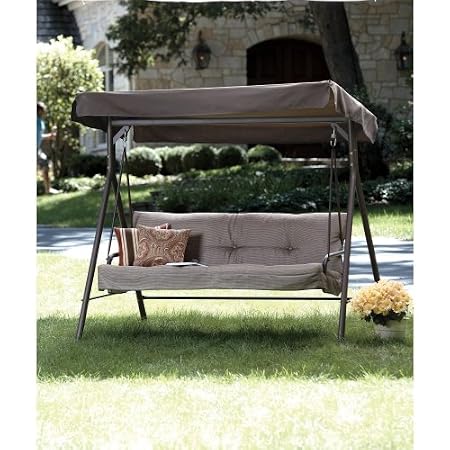
Living Accents 3 Person Canopy Swing

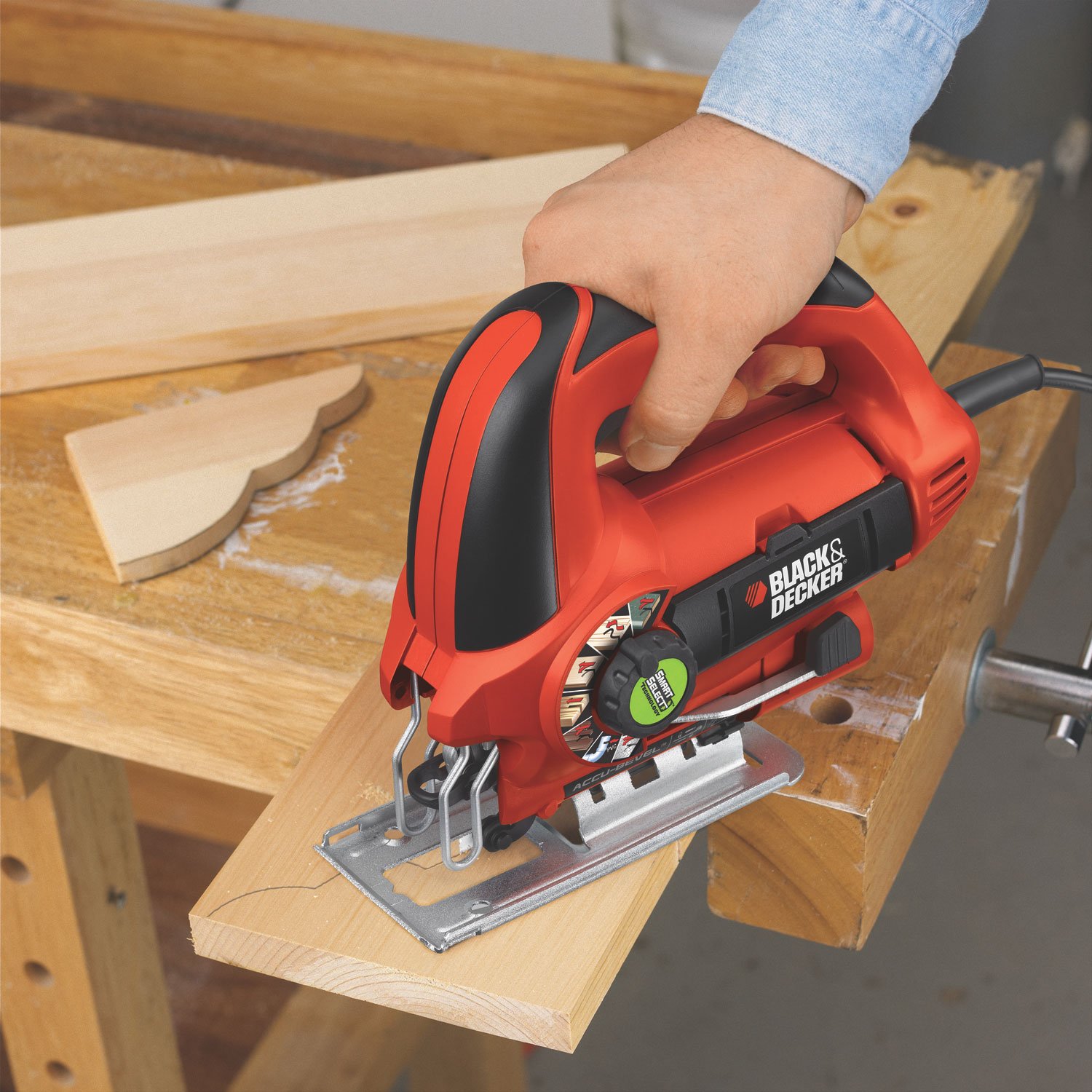
Great Jig Saw for DIY.

Now, you know how to make furnitures and you will need several tools for your DIY. Black & Decker JS660 Jig Saw with Smart Select Dial, great jig saw for beginner and DIY job.
Great Jig Saw for DIY.
Black & Decker’s JS660 jig saw has a SmartSelect dial that automatically sets optimal orbital settings, with seven helpful pre-programmed settings. These, combined with the saw’s other features, make it ideal for cutting wood, metal, and plastic and for making straight and curved cuts.

Here are some of customer feedback on Black & Decker’s JS660 jig saw  :
“ This mid-low priced jigsaw has cut holes in 1/2" pine wood like butter...get the right blades for every tool/project! ” PenName | 2 reviewers made a similar statement

“ Really happy with it as a homeowner - does what I need done. ” A. Eric Brewington | 4 reviewers made a similar statement

“ I've had this saw for about a year now and absolutely love it. ” Anthony D. | 2 reviewers made a similar statement
Jig Saw for beginner
Jig Saw for beginners

How to make a dresser


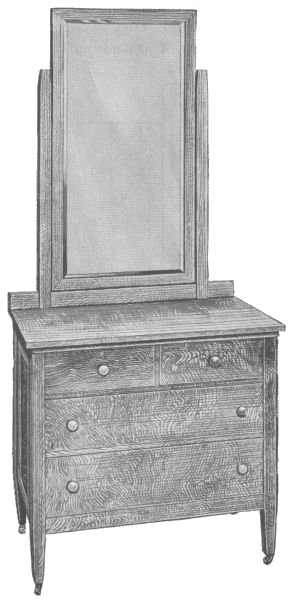
how to make a Dresser
Dresser in Quarter-Sawed Oak

The dresser shown in the illustration was made of quarter-sawed white oak and finished golden and waxed. The mirror is of beveled glass and the following is the stock bill:
  • 1 top, 3/4 by 19-1/2 by 33 in., S-2-S.
  • 4 posts, 1-3/4 by 1-3/4 by 28 in., S-4-S.
  • 4 end rails, 3/4 by 2-1/4 by 17 in., S-2-S.
  • 4 stiles, 3/4 by 2-1/2 by 20 in., S-2-S.
  • 2 panels, 3/16 by 12 by 18 in., S-2-S.
  • 3 facings, 3/4 by 2-1/4 by 29 in., S-2-S.
  • 2 top frame pieces, 3/4 by 2 by 32 in., S-2-S.
  • 2 top frame pieces, 3/4 by 2 by 19 in., S-2-S.
  • 2 mirror supports, 1 by 2 by 33 in., S-2-S.
  • 1 mirror support, 3/4 by 2-1/2 by 33 in., S-2-S.
  • 1 drawer front, 3/4 by 7-1/4 by 28 in., S-2-S.
  • 1 drawer front, 3/4 by 6-1/4 by 28 in., S-2-S.
  • 2 drawer fronts, 3/4 by 5-1/4 by 14 in., S-2-S.
  • 1 partition, 3/4 by 1 by 6 in.
  • 2 mirror-frame pieces, 3/4 by 2 by 40 in., S-2-S.
  • 2 mirror-frame pieces, 3/4 by 2 by 20 in., S-2-S.
The following material list may be of common stock and not quarter-sawed:
  • Mirror-backing pieces equivalent to 1/4 by 18-1/2 by 36 in., S-2-S.
  • 2 cleats, 3/4 by 2 by 10 in., S-4-S.
  • 4 drawer-support frame pieces, 3/4 by 2 by 29 in.
  • 7 drawer-support frame pieces, 3/4 by 2 by 15 in.
  • Slides taken from scrap stock, 3/4 by 1 by 15 in.
  • 3 back pieces, 3/4 by 2-1/4 by 28 in., S-2-S.
  • 2 back pieces, 1/4 by 8 by 28 in., S-2-S.
  • 8 drawer sides, 1/2 by 7-1/4 by 17 in., S-2-S.
  • 2 drawer backs, 3/8 by 7 by 27 in., S-2-S.
  • 2 drawer backs, 3/8 by 7 by 13 in., S-2-S.
  • 2 drawer bottoms, 3/8 by 15 by 27 in., S-2-S.
  • 2 drawer bottoms, 3/8 by 15 by 13 in., S-2-S.
In working up the various parts proceed in the usual manner. If not thoroughly familiar with the various tool processes involved, it will be necessary to investigate pieces of near-by furniture and to read up some good text dealing with the processes involved.
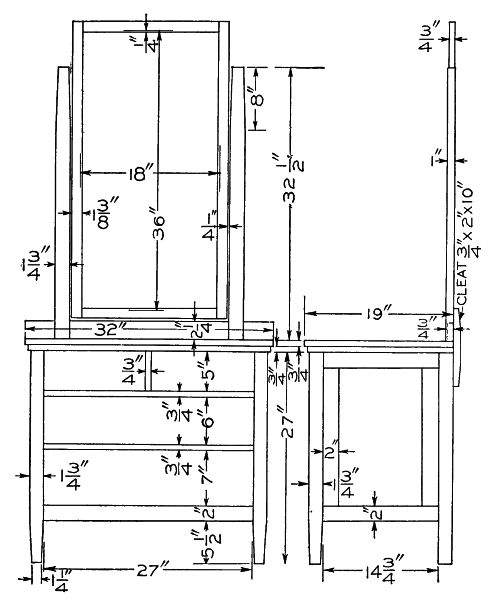
The exact size of the mirror is 18 by 36 in. and the frame should be rabbeted to correspond.
How to make a dresser
Detail of the Dresser
For a finish, a coat of paste filler colored so as to [103]give a rich golden brown should be applied first. Allow this to harden, after rubbing and polishing it in the usual manner, then apply a thin coat of shellac. Sand this lightly when hard, and over this apply a coat of orange shellac. Over the shellac put several coats of some good rubbing wax and polish each coat well. If a striking contrast is wanted for the medullary rays of the quartering, apply a golden-oak stain first. Sand this lightly, then apply a second coat diluted one-half with solvent and sand again lightly. Apply a thin coat of shellac, then, when dry, sand lightly and apply paste, and proceed as before.

HOW TO MAKE A PIANO BENCH

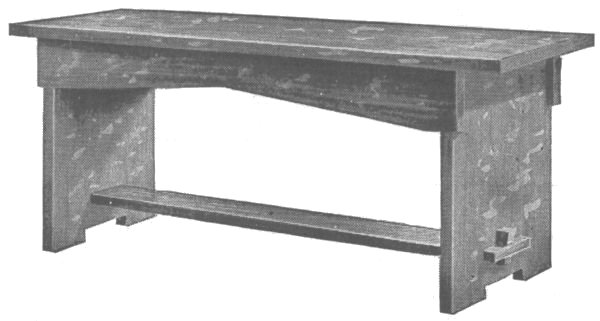
how to make Piano Bench
Piano Bench

All the material used in the making of this piano bench is 1 in. thick, excepting the two rails, which are 7/8 in. thick. The bench can be made from any of the furniture woods, but the case may demand one made from mahogany. If so, this wood can be purchased from a piano factory. The following stock list of materials may be ordered from a mill, planed and sandpapered:
  • 1 top, 1 by 16 by 36-1/2 in.
  • 2 ends, 1 by 14 by 18 in.
  • 1 stretcher, 1 by 4 by 31-1/2 in.
  • 2 side rails, 7/8 by 4 by 29-1/2 in.
  • 2 keys, 1 by 1 by 3-1/2 in.
  • 6 cleats, 1 by 1 by 4 in.
The dimensions given, with the exception of the keys and cleats, are 1/2 in. longer than necessary for squaring up the ends.
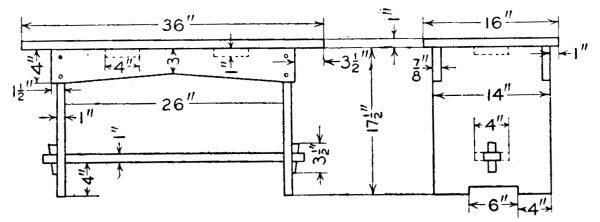
The two rails are cut slanting from a point 1-1/2 in. from each end to the center, making them only 3 in. wide in the middle. The rails are "let into" the edges of the ends so the outside of the rails and end boards will be flush. The joints are put together with glue and screws. The cleats are fastened with screws to the inside of the rails and to the top. The stretcher has a tenon cut on each end which fits into a mortise cut in each end. The tenons will have sufficient length to cut the small mortise for the key.
How to make Piano Bench
Piano Bench Details
The kind of wood used will determine the color of the stain for the finish. This also depends on matching other pieces of furniture.
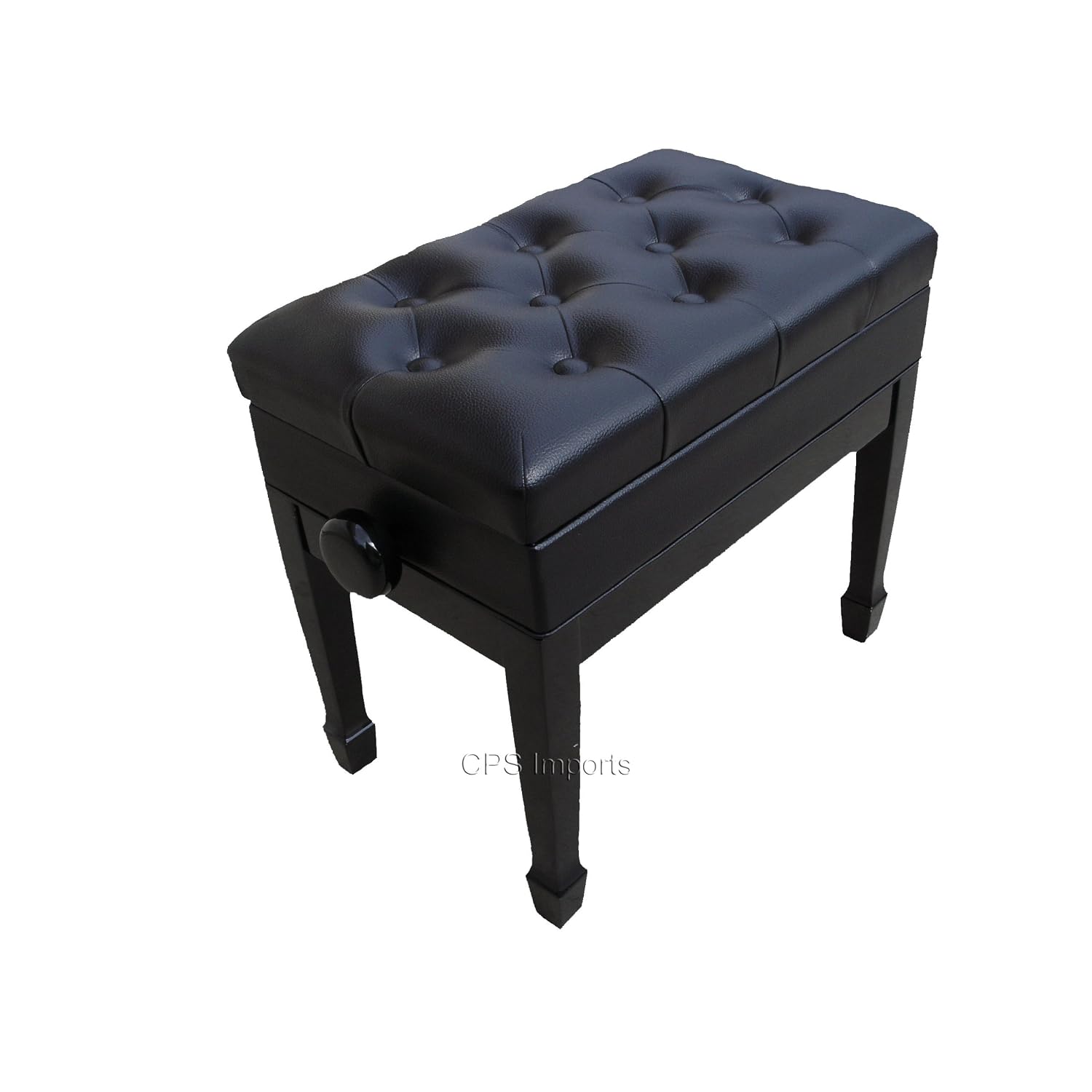
Ebony Leather Adjustable Artist Piano Bench

Ebony Leather Adjustable Artist Piano Bench

HOW TO MAKE AND FINISH A MAGAZINE STAND

For the magazine stand shown herewith there will be needed the following pieces:

  • 1 top, 7/8 in. by 15-1/2 in. by 16-1/2 in.
  • 1 shelf, 7/8 in. by 11-1/2 in. by 12-1/2 in.
  • 1 shelf, 7/8 in. by 12-1/2 in. by 14-3/4 in.
  • 1 shelf, 7/8 in. by 13-1/2 in. by 16-1/2 in.
  • 2 sides, 7/8 in. by 14-1/2 in. by 33-1/2 in.
  • 1 brace, 7/8 in. by 3-1/4 in. by 17 in.
  • 1 brace, 7/8 in. by 2-1/2 in. by 11-1/2 in.
  • 6 braces, 7/8 in. by 2 in. by 2 in.
 Order these pieces mill-planed on two surfaces to the thickness specified above and also sandpapered. Quarter-sawed white oak makes the best appearance of all the woods that are comparatively easy to obtain. Plain sawed red or white oak will look well but are more liable to warp than the quarter-sawed. This is quite an element in pieces as wide as these. Begin work on the sides first. Plane a joint edge on each and from this work the two ends. The ends will be square to the joint edge but beveled to the working face. A bevel square will be needed for testing these beveled ends. To set the bevel make a drawing, full size or nearly so, of the front view and place the bevel on the drawing, adjusting its sides to the angle wanted. Work from a center line in laying off the drawing. Having planed the ends, lay off the sides. This is done by measuring from the joint edge along the bottom 14 in., from the joint edge along the top 1-1/2 in. and from this 11 in. Connect the points by means of a pencil and straightedge.
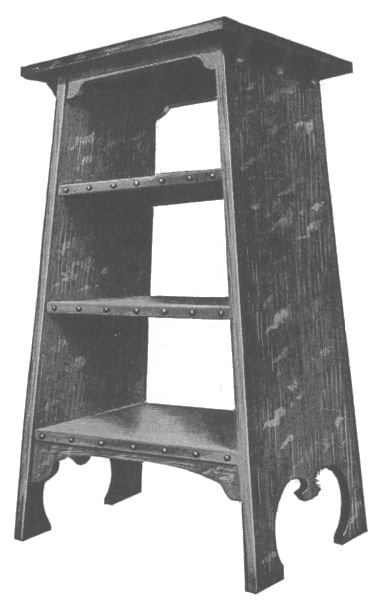
A MAGAZINE STAND

A MAGAZINE STAND

Before cutting off the joint edges of the pieces measure off and square lines across to indicate the locations of the shelves. Put both pieces together and mark across both joint edges at once to insure getting both laid off alike. The design at the bottom can be varied to suit the fancy of the worker. For such a design as is shown, draw on paper, full size, half of it; fold on the center line and with scissors cut both sides of the outline by cutting along the line just drawn. Trace around this pattern on the wood, and saw out with compass or turning saw. The shelves may now be made. The bevel of the ends of the shelves will be the same as for the ends of the side pieces. The lengths may be obtained by measuring the drawing. Remember that length is always measured along the grain and that the end grain of the shelves must extend from side to side in this stand. The widths may be obtained by measuring the width of the sides at the points marked out on them for the location of the shelf ends. It is best not to have the shelves the full width of the sides, since the edges of the shelves are to be faced with leather. Make each shelf 1/2 in. less than the width of the side, at the place that the shelf is to be fastened. The top will be squared up in the usual manner, 15 in. wide by 16 in. long. These parts may now be put together. They may be fastened in any one of a variety of ways. Round-head blued screws may be placed at regular intervals through the sides. Finishing nails may be used and the heads set and covered with putty stained to match the wood. Finish nails may be placed at regular intervals and fancy headed nails used to cover the heads.
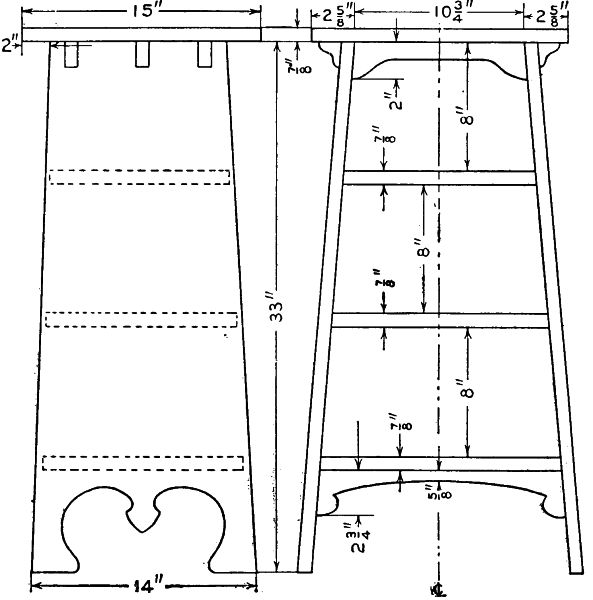
Details of the Magazine Stand
The braces should be formed and fitted but not fastened until the finish has been applied. Thoroughly scrape and sandpaper all parts not already so treated. Probably no other finish appeals to so many people as golden oak. There is no fixed standard of color for golden oak. Different manufacturers have set standards in their part of the country, but the prevailing idea of golden oak is usually that of a rich reddish brown.
Proceed as follows: Egg shell gloss: 1.—One coat of golden oak water stain, diluted with water if a light golden is desired. 2.—Allow time to dry, then sandpaper lightly with fine sandpaper. This is to smooth the grain and to bring up the high lights by removing the stain from the wood. Use No. 00 sandpaper and hold it on the finger tips. 3.—Apply a second coat of the stain diluted about one-half with water. This will throw the grain into still higher relief and thus produce a still greater contrast. Apply this coat of stain very sparingly, using a rag. Should this stain raise the grain, again rub lightly with fine worn sandpaper, just enough to smooth. 4.—When this has dried, put on a light coat of thin shellac. Shellac precedes filling that it may prevent the high lights—the solid parts of the wood—from being discolored by the stain in the filler, and thus causing a muddy effect. The shellac being thin does not interfere with the filler's entering the pores of the open grain. 5.—Sand lightly with fine sandpaper. 6.—Fill with paste filler colored to match the stain. 7.—Cover this with a coat of orange shellac. This coat of shellac might be omitted, but another coat of varnish must be added. 8.—Sandpaper lightly. 9.—Apply two or three coats of varnish. 10.—Rub the first coats with hair cloth or curled hair and then with pulverized pumice stone, crude oil or linseed oil. Affix the braces just after filling, using brads and puttying the holes with putty colored to match the filler. The shelves may be faced with thin leather harmonizing with the oak, ornamental headed tacks being used to fasten it in place.
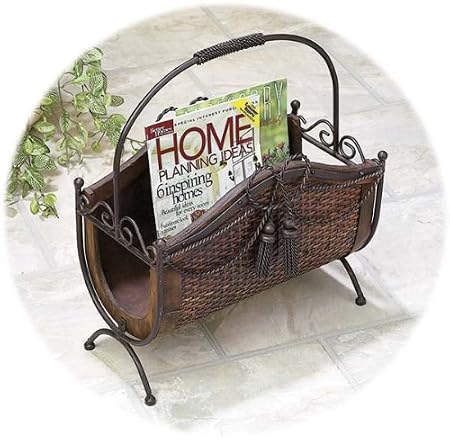
Bamboo Wood Metal Magazines Paper Rack Stand

Bamboo Wood Metal Magazines Paper Rack Stand

HOW TO MAKE A PORCH CHAIR

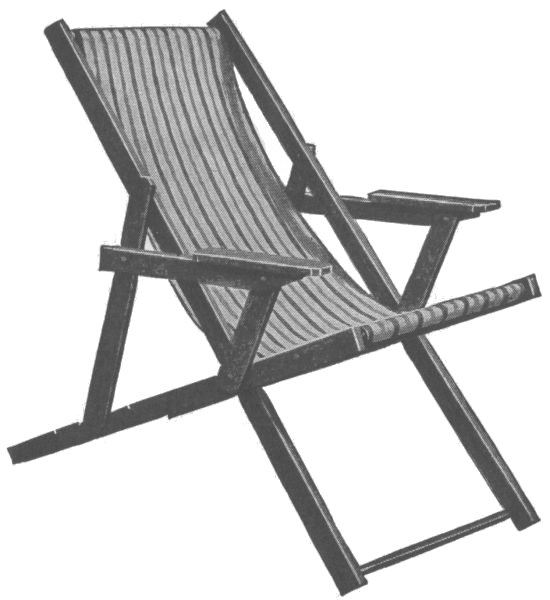
The illustration shows a very comfortable and attractive porch chair that can be made with few tools and easily procured material. Most any kind of wood will answer, says the American Carpenter and Builder, but if open grained wood, such as oak or chestnut, is used, the parts should be filled with a paste filler. If the natural color of the wood is not desired, the wood may first be stained, the filler being colored somewhat darker than the stain. Procure enough lumber to make all the pieces shown in the detail drawing and finish to the dimensions shown, being careful to make the corresponding pieces exactly alike in order to preserve the perfect symmetry which is necessary in work of this kind. In boring the holes care must be taken to keep both edges of the holes sharp and clean. The holes should each be bored until the spur shows; the bit should then be withdrawn and the rest of the boring be done from the other side. The semicircular notches are made by placing the two pieces edge to edge in the vise and placing the spur of the bit in the crack. The 1-in. bit is used. As it will be difficult to finish the boring of these blocks from the second side, the parts remaining may be cut out with the knife after the pieces have been separated. Five 1/2-in. dowel rods are needed. It is possible to get these in one long piece if you happen to live near a mill and then all you will have to do is to saw off the desired lengths. However, if they cannot be got easily you can make your own. Two  rods each 18-1/4 in. long; two rods each 20-1/4 in. and one rod 22-1/4 in. give the exact lengths. It is well to cut each piece a little longer than required so that the ends which are imperfectly formed may be cut off. These rods should fit tight and may be fastened in addition with a small screw or nail from the under or back side.

Porch Chair Finished

The hand rests should be nailed to the arms with small nails or brads before the arms are bolted. The illustration of the assembled chair shows the relative position. The bolts should be 1/4 in. and of the following lengths: 4 bolts 2-1/4 in. long; 2 bolts 2 in. long; 2 bolts 3 in. long. Washers should be placed between adjacent pieces of wood fastened together with bolts and also at both ends of the bolts. This will require 26 washers in all. While the size of the chair may be varied, it will be necessary to keep the proportions if the parts are to fold properly.

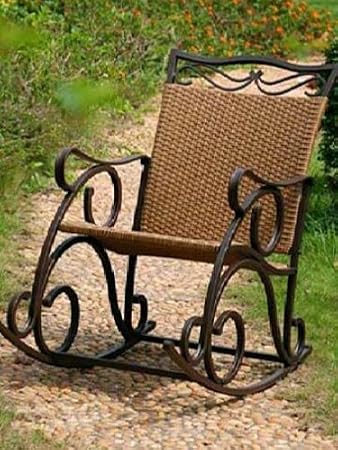
Valencia Resin Wicker / Steel Rocker (Matte Brown)

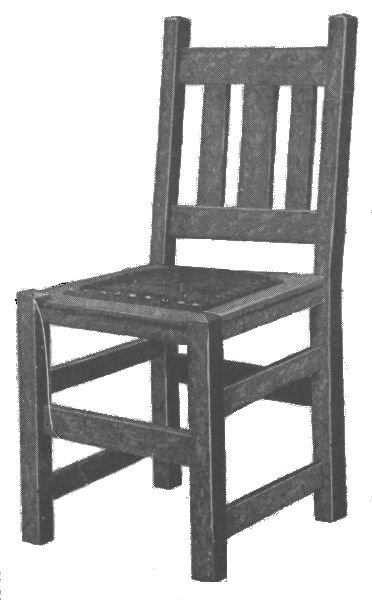
How to make a chair - HOME-MADE MISSION CHAIR


Suitable for Dining Room Use

HOME-MADE MISSION CHAIR

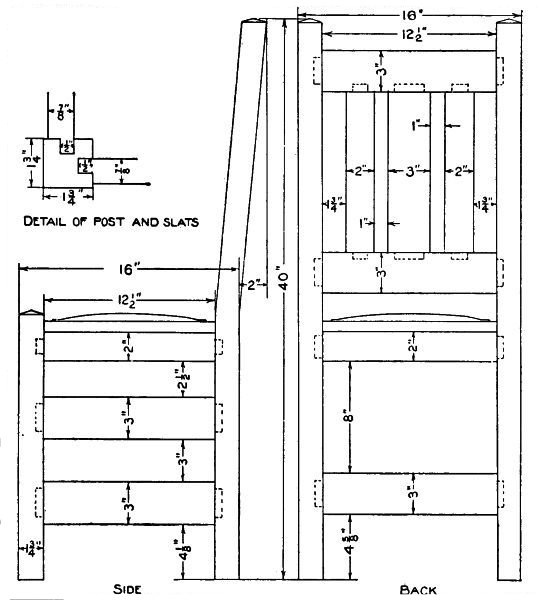
A mission chair suitable for the dining room can be made from any one of the furniture woods to match the other articles of furniture. The materials can be secured from the planing mill dressed and sandpapered ready to cut the tenons and mortises. The material list can be made up from the dimensions given in the detail drawing. The front legs or posts, as well as the back ones, are made from 1-3/4-in. square stock, the back ones having a slope of 2 in. from the seat to the top. All the slats are made from 7/8-in. material and of such widths as are shown in the detail. The three upright slats in the back are 3/4-in. material. The detail drawing shows the side and back, the front being the same as the back from the seat down. All joints are mortised in the posts, as shown. The joints, however, can be made with dowels if desired. If making dowel joints they must be clamped very tight when glued and put together. The seat can be made from one piece of 7/8-in. material, fitted with notches around the posts. This is then upholstered with leather without using springs. Leather must be selected as to color to suit the kind of wood used in making the chair. The seat can also be made with an open center for a cane bottom by making a square of four pieces of 7/8-in. material about 4 in. wide. These pieces are fitted neatly to the proper size and dowelled firmly together. After the cane is put in the opening the cane is covered over and upholstered with leather in the same manner as with a solid bottom.
Details of Chair Construction